
Let Us Worship
A Philosophy of Music
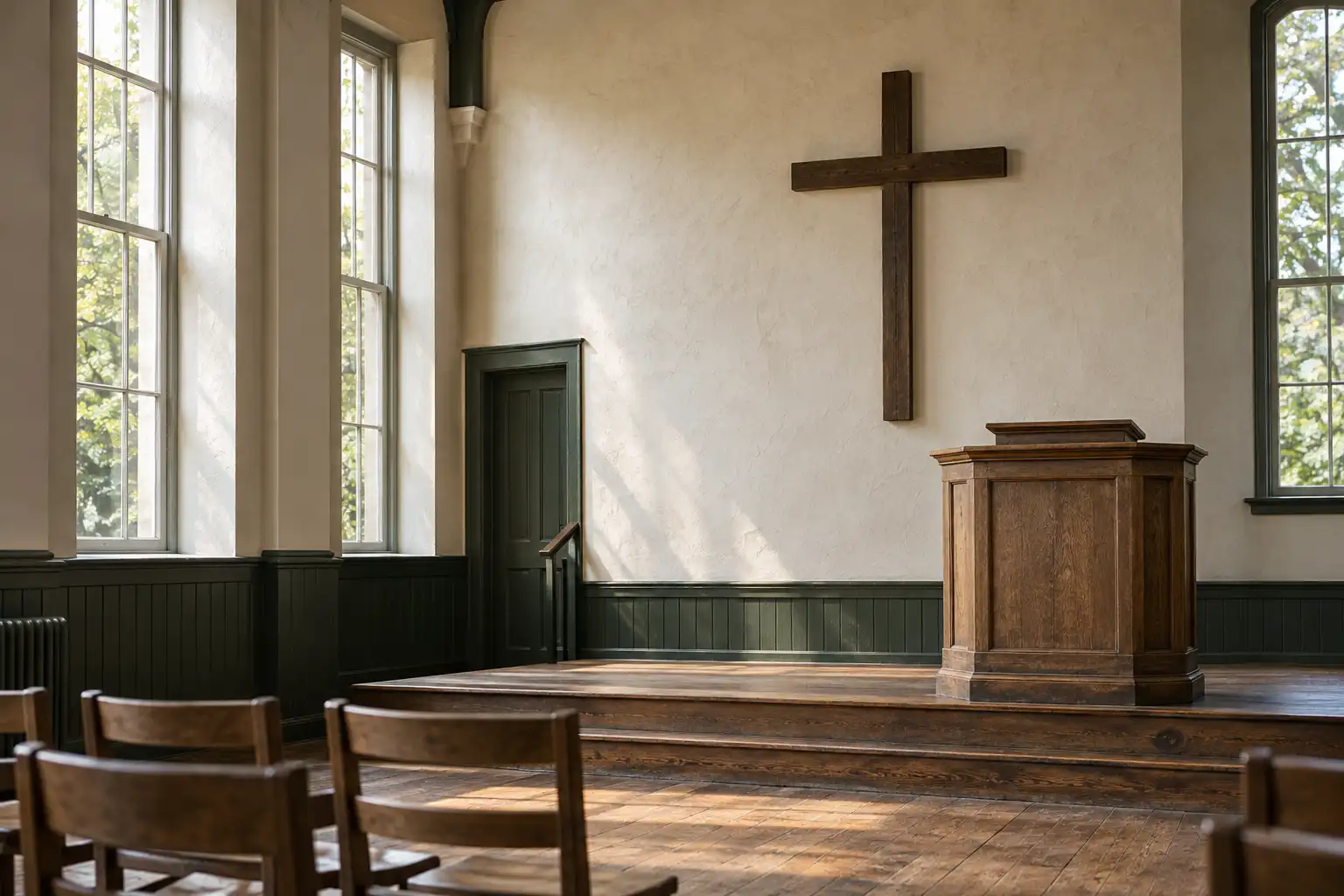
Oh come, let us worship and bow down; let us kneel before the LORD our Maker. For He is our God, and we are the people of His pasture, and the sheep of His hand…. (Psalm 95:6-7)
Sing to the LORD, all the earth; proclaim the good news of His salvation from day to day. Declare His glory among the nations, His wonders among all peoples. For the LORD is great and greatly to be praised; He is also to be feared above all gods. (1 Chronicles 16:23-25)
Worship According to God’s Instructions
Then Aaron lifted his hand toward the people, blessed them, and came down from offering the sin offering, the burnt offering, and peace offerings. And Moses and Aaron went into the tabernacle of meeting and came out and blessed the people. Then the glory of the LORD appeared to all the people, and fire came out from before the LORD and consumed the burnt offering and the fat on the altar. When all the people saw it, they shouted and fell on their faces. (Leviticus 9:22-24)
Prior to these verses and in the preceding chapters, God had given explicit instructions for the consecration of the priests and the ways in which Israel was to offer sacrifices in their worship. The instructions were carried out the very next day, and Aaron blessed the people with the blessing which God had given him. God showed them His acceptance of their worship by showing the people His glory. He showed them His acceptance of their sacrifices by consuming the sacrifices with fire from heaven. The people’s response? They sang aloud for joy and bowed in reverence. What a beautiful picture of worship that God accepts.
Worship According to Our Own Whims
Then Nadab and Abihu, the sons of Aaron, each took his censer and put fire in it, put incense on it, and offered profane fire before the LORD, which He had not commanded them. So fire went out from the LORD and devoured them, and they died before the LORD. And Moses said to Aaron, “This is what the LORD spoke, saying: ‘By those who come near Me I must be regarded as holy; and before all the people I must be glorified.’” So Aaron held his peace. (Leviticus 10:1-3)
Very soon, perhaps the next day, the sons of Aaron, who had just been consecrated according to God’s instructions, and commissioned to lead the people in worship, abandoned those instructions and did what God had not commanded them. Perhaps their consecration had made them arrogant, or perhaps they were impetuous or careless, or maybe they were even very sincere in doing what they did, thinking one way was as good as another. Whatever the reason that caused them to do what they did, they showed contempt for God’s holy instructions, and rather than bowing before God they acted on their own whims. This time fire from heaven consumed the priests instead of the sacrifice. What a sad picture of worship that God rejects.
Distinguishing Between the Holy and the Unholy
And Moses said to Aaron, “This is what the LORD spoke, saying: ‘By those who come near Me I must be regarded as holy; and before all the people I must be glorified.’ “ So Aaron held his peace. (Leviticus 10:3)
“Do not drink wine or intoxicating drink, you, nor your sons with you, when you go into the tabernacle of meeting, lest you die. It shall be a statute forever throughout your generations, that you may distinguish between holy and unholy, and between unclean and clean, and that you may teach the children of Israel all the statutes which the LORD has spoken to them by the hand of Moses.” (Leviticus 10:9-11)
When the sons of Aaron died, Moses stepped in immediately and prohibited Aaron and his other sons from mourning their deaths. The worship of God must go on, and the priests must learn to distinguish between holy and unholy worship because God demanded that by those who come near Me I must be regarded as holy; and before all the people I must be glorified. They were to learn this distinction not only because God demanded it, but also so that the coming generations could be taught how God is to be worshiped. All which would distract them from proper leadership in worship must be abandoned. Worship is serious business, and if one attempts to lead worship, he must regard God as holy and glorify Him before the people.
The Consequences of Failure to Distinguish Between Holy and Unholy Worship
Her priests have violated My law and profaned My holy things; they have not distinguished between the holy and unholy, nor have they made known the difference between the unclean and the clean; and they have hidden their eyes from My Sabbaths, so that I am profaned among them…. Therefore I have poured out My indignation on them; I have consumed them with the fire of My wrath; and I have recompensed their deeds on their own heads,” says the Lord GOD. (Ezekiel 22:26,31)
Sadly, Nadab and Abihu were not the last of the priestly line of Aaron who failed to distinguish between the holy and the unholy, violating God’s law and profaning His holy things. They were not the last to be consumed with the fire of God’s wrath. Throughout the ages, God’s people have neglected to be discerning in worship. We have invited God’s wrath, and it is only through the LORD’s mercies we are not consumed, Because His compassions fail not. (Lamentations 3:22) What mercy! What grace!
Living Sacrifices Which Are Holy and Acceptable
I beseech you therefore, brethren, by the mercies of God, that you present your bodies a living sacrifice, holy, acceptable to God, which is your reasonable service. And do not be conformed to this world, but be transformed by the renewing of your mind, that you may prove what is that good and acceptable and perfect will of God. (Romans 12:1-2)
From the days of the Old Testament Tabernacle and Temple worship, we must now leap ahead to the work of Christ. The final sacrifice of blood to atone for sin has been offered. Jesus has died and has risen from the dead. But the apostle Paul reminds us that our worship of God through sacrificing is not done. Indeed, because of God’s mercies in not consuming us for our failures, we are to present ourselves as living sacrifices, holy sacrifices, acceptable sacrifices. We still need to distinguish between the holy and the unholy in worship. Two things are needful for this: not being conformed to this world and being transformed by the renewing of our minds. These are God’s instructions for worship as surely as the instructions He gave Moses and Aaron. We believers now are a holy priesthood, to offer up spiritual sacrifices acceptable to God through Jesus Christ. (1 Peter 2:5)
The Sacrifice of Praise–Our Songs
Therefore by Him let us continually offer the sacrifice of praise to God, that is, the fruit of our lips, giving thanks to His name. (Hebrews 13:15)
Whoever offers praise glorifies Me; and to him who orders his conduct aright I will show the salvation of God.” (Psalm 50:23)
Oh, that men would give thanks to the LORD for His goodness, and for His wonderful works to the children of men! Let them sacrifice the sacrifices of thanksgiving, and declare His works with rejoicing. (Psalm 107:21-22)
…speaking to one another in psalms and hymns and spiritual songs, singing and making melody in your heart to the Lord, giving thanks always for all things to God the Father in the name of our Lord Jesus Christ, (Ephesians 5:19-20)
Of the many sacrifices we are called upon to make in gratitude for the mercies of God, none are so continually to be offered as the sacrifice of praise and thanksgiving to God. By such sacrifices we glorify God. By such sacrifices we declare His character and His works to one another. What is the sacrifice of praise? It is the fruit of our lips–our song.
How to Offer the Sacrifice of Praise
Teach me Your way, O LORD; I will walk in Your truth; unite my heart to fear Your name. I will praise You, O Lord my God, with all my heart, and I will glorify Your name forevermore. (Psalm 86:11-12)
I will extol You, my God, O King; and I will bless Your name forever and ever. Every day I will bless You, and I will praise Your name forever and ever. Great is the LORD, and greatly to be praised; and His greatness is unsearchable. One generation shall praise Your works to another, and shall declare Your mighty acts. I will meditate on the glorious splendor of Your majesty, and on Your wondrous works. (Psalm 145:1-5)
The sacrifices of God are a broken spirit, a broken and a contrite heart–These, O God, You will not despise. (Psalm 51:17)
For thus says the High and Lofty One Who inhabits eternity, whose name is Holy: “I dwell in the high and holy place, with him who has a contrite and humble spirit, to revive the spirit of the humble, and to revive the heart of the contrite ones. (Isaiah 57:15)
God is Spirit, and those who worship Him must worship in spirit and truth. (John 4:24)
As we learned from the story of Nadab and Abihu, not all sacrifices are acceptable in worship. Which sacrifices of praise are acceptable to God? For our sacrifices to be acceptable they must be whole-hearted, that is, undivided and completely dedicated to the one purpose of glorifying God. A heart which truly worships God cannot be divided between homage to the world and to God. Our God is a jealous God. Moreover, acceptable sacrifices are given every day and forever and ever. They are inter-generational intentionally. They declare God’s mighty acts, His glorious splendor and majesty, His wondrous works. They require a broken spirit and contrite heart. Acceptable worship must be done in spirit and truth. Acceptable worship is free from the physical sacrifices of the Old Testament. Because the last bloody sacrifice was made by Christ, our sacrifice is now a spiritual one. Because God is Spirit He desires that we worship Him with our spirit. Acceptable worship is free of irrationality because God has revealed truth in the person of Jesus. He is the way, the truth and the life.
The Medium of Praise
Let the word of Christ dwell in you richly in all wisdom, teaching and admonishing one another in psalms and hymns and spiritual songs, singing with grace in your hearts to the Lord. (Colossians 3:16)
…speaking to one another in psalms and hymns and spiritual songs, singing and making melody in your heart to the Lord, giving thanks always for all things to God the Father in the name of our Lord Jesus Christ, (Ephesians 5:19-20)
Also with the lute I will praise You–and Your faithfulness, O my God! To You I will sing with the harp, O Holy One of Israel. My lips shall greatly rejoice when I sing to You, and my soul, which You have redeemed. (Psalm 71:22-23)
Sing aloud to God our strength; make a joyful shout to the God of Jacob. Raise a song and strike the timbrel, the pleasant harp with the lute. Blow the trumpet at the time of the New Moon, at the full moon, on our solemn feast day. (Psalm 81:1-3)
What instruments shall we use to offer our sacrifices of praise? Most readily available is the voice, created in us by our Maker. With it we can speak to one another using sacred odes (the Psalms being perfect examples), as well as simpler odes (hymns), and metrical odes which are spiritual in nature. Our spiritual songs teach as well as admonish, provided they are informed richly by the Word of Christ and done with grace in our hearts. Our songs should be characterized by thankfulness, joyfulness, and pleasantness. In addition to the voice, we offer sacrifices of praise with man-made instruments. They help us raise our songs, to sing aloud, as well as making melody in our hearts. They mark festive as well as solemn days. All instruments of praise, whether voice or others, must be offered to God the Father in the name of our Lord Jesus Christ, just as our prayers are offered in His name.
Lyrics as Sacrifice of Praise
Let the word of Christ dwell in you richly in all wisdom, teaching and admonishing one another in psalms and hymns and spiritual songs, singing with grace in your hearts to the Lord. (Colossians 3:16)
When we use our voices to offer a sacrifice of praise in song, most often we use words. When we want to teach, or admonish, or simply declare the character and works of God, words are vital. As the only creation of God that is able to communicate with words, we are uniquely able to offer this kind of sacrifice. While the heavens declare the glory of God, and the skies show His handiwork, their “voice” is incomplete. God has given us His Word and told us to declare it. God created us with the ability to declare His word in song, and we are urged in Scripture to do this. When we sing, whether psalms, hymns or spiritual songs, the word of God is our subject matter. The closer we stay to His words, the more He will be glorified. In any case, the Word of God must dwell richly in all wisdom in those who write our songs so that His Word is declared clearly and accurately.
What subjects then are acceptable in our songs? Perhaps the prayer that the Lord taught His disciples would also be a good outline of song lyric subjects. First, we can sing songs that hallow God’s name, giving the multiple reasons why His name should be hallowed (He is holy, good, faithful, merciful, just, etc.) Secondly we can sing songs that plead for His will to be done on earth (missions, holy living, stewardship, etc.). Next we can ask/give thanks for daily favor from God (daily bread, healing, strength, wisdom). We can sing songs related to forgiveness of sins (confession, repentance, daily cleansing, assurance of pardon). We can sing songs of fellowship (forgive as forgiven, unity in the church). We can sing songs of supplication for deliverance from evil (salvation songs, doctrinal instruction, songs of devotion and commitment). Finally, we can sing songs which celebrate the Kingdom of God, His power and His glory forever. And then there can be the great amens and responses.
Above all, let there be grace in our hearts as we sing – let there be the divine influence in our hearts: thankfulness, joyfulness, pleasure, truth. There is so much subject matter for our sacrifices of praise that it ill-befits us to be too repetitious in our lyrics. Repetition can be a mark of shallowness, of not thinking broadly or deeply enough to truly honor the holy God (who is so rich in multi-faceted truth), and it wastes the time of the worshiper.
Music as Sacrifice of Praise
The heavens declare the glory of God; and the firmament shows His handiwork. Day unto day utters speech, and night unto night reveals knowledge. There is no speech nor language where their voice is not heard. Their line has gone out through all the earth, and their words to the end of the world…. (Psalm 19:1-4)
Even things without life, whether flute or harp, when they make a sound, unless they make a distinction in the sounds, how will it be known what is piped or played? For if the trumpet makes an uncertain sound, who will prepare for battle? (1 Corinthians 14:7-8)
Give unto the LORD the glory due to His name; worship the LORD in the beauty of holiness. (Psalm 29:2)
Give to the LORD, O families of the peoples, give to the LORD glory and strength. Give to the LORD the glory due His name; bring an offering, and come before Him. Oh, worship the LORD in the beauty of holiness! (1 Chronicles 16:28-29)
It is somewhat easy to distinguish between the holy and the unholy in the words we choose to worship our holy God, particularly if the Word of God is dwelling richly in the us. Perhaps more difficult is distinguishing the holy from the profane in music. The music of the God-created universe sends out a message that can be heard in every language. It reveals knowledge. It can be universally understood. So it is with all music. Music is not just a vehicle for words; it is a message in itself. It can be heard in every language. It reveals knowledge, whether good or evil. It can be universally understood. The care we must take in worship music is that the message is true. If it is a message that contradicts the truth in the lyrics associated with it, the message becomes garbled. If the message in the music overpowers the message in the lyrics, the message is lost completely.
When the subject of “tongue speaking” was being discussed in I Corinthians, the writer compared unintelligible speaking to a trumpet that makes an unclear call to battle. Perhaps the same reasoning can be applied to unintelligible instrumental music. If there is no form, or there is chaos in it, or it lacks beauty, progression, climax, or resolve, the message will be unclear at best and not useful in the call to service. The music of the God-created universe reflects the Creator; so must our worship music. The music of the God-created universe is the same language as the Bible. Our worship music, too, must reflect a Biblical/Christian worldview. The music of the universe reflects the beauty of God’s holiness. Likewise, we are commanded to bring our offering and come before Him to worship in the beauty of God’s holiness. There is no beauty comparable to the beauty of God’s holiness. The beauty of our music can at best be only a reflection of that beauty, but toward that we should strive. Deliberately jagged, chaotic, dissonant, ugly music communicates that we live in a world God has forsaken, and it cannot lead us to worship a holy God who is ever present, harmonious in all His ways, peaceful, loving, and beautiful in His holiness.
A distinction must also be made regarding what effect the music itself has upon our human responses. Music that is sensual in style may stimulate our senses or even evoke an emotional response. But is the satisfaction of the cravings of our senses a Scriptural principle to guide us in the worship of a God who calls us to worship Him in spirit and truth? The example of Esau in Genesis 25 should serve as a warning for us here. He made the disastrous choice to despise the spiritual for the carnal, and he paid a terrible price for his decision. Music that is conformed to this world will necessarily communicate the viewpoint of this world. Musicians, like all worshipers, must be transformed by the renewing of their minds in order to discern what is good and acceptable and perfect. And do not be conformed to this world, but be transformed by the renewing of your mind, that you may prove what is that good and acceptable and perfect will of God. (Romans 12:2)
The Sacrifice of Praise as a New Song
Old Versus New
Oh sing to the LORD a new song! For He has done marvelous things; His right hand and His holy arm have gained Him the victory. (Psalm 98:1)
But you must continue in the things which you have learned and been assured of, knowing from whom you have learned them, and that from childhood you have known the Holy Scriptures, which are able to make you wise for salvation through faith which is in Christ Jesus. (2 Timothy 3:14-15)
The Scriptures, especially the book of Psalms, are replete with admonitions to sing a new song. By this many have understood that it is important to jettison our old songs and invent new melodies and lyrics often. But is that the real meaning of a new song? Could it also mean that our songs should be new in the sense that they are different from the songs we sang before the grace of God entered into our life? When we experience a new work of grace, we are to express it in a new song. It might well be a song written long before we were born, but if it is one which expresses the newness we have just experienced, then for us, it is a new song. The Bible’s songbook - the book of Psalms - though ancient, furnishes us with endless ways to express a new work of grace. Through the centuries, God has gifted men and women to write the songs of Zion. They were acquainted with the sacred writings and have taught us much that can reliably be believed. Discarding that wealth of writing is both foolish and harmful to the church. How else can we fulfill this command: One generation shall praise Your works to another, and shall declare Your mighty acts. (Psalm 145:4)? Timothy learned from his mother, his grandmother, and Paul the things he firmly believed. Paul said, continue in those things, recognizing the grace and knowledge that had been given those teachers.
Songs of Zion in a Foreign Land
For there those who carried us away captive asked of us a song, and those who plundered us requested mirth, saying, “Sing us one of the songs of Zion!” How shall we sing the LORD’s song in a foreign land? (Psalm 137:3-4)
Thus says the LORD: “Stand in the ways and see, and ask for the old paths, where the good way is, and walk in it; then you will find rest for your souls. But they said, ‘We will not walk in it.’ (Jeremiah 6:16)
In many ways, we live in a foreign land. This world is not our home. Those around us tell us to entertain them with the songs of Zion. When Israel was confronted with this scenario, they simply hung up their harps on the willows and refused to sing. That was not the right solution. We are still commanded to sing to the Lord even in this foreign land. The solution when things look dim, the church is weak, and we are commanded to entertain the world rather than to lead it, is to stop moving in the direction that has led to our captivity by this world and go and inquire where the old path is and walk in it. The old path is not to be sought because it is old, but because it is good. Refusing the good is rebellion.
But some might say: “What about evangelism? How can we win those among who we now live unless they love our songs?” Giving in to their demands that we entertain them by singing the songs of Zion is not the answer. The fear of man brings a snare (Proverbs 29:25), and rather than impressing those we seek to “entertain,” we run the risk of being negatively influenced by the world’s priorities instead. Here, indeed, is the need for singing a new song–that is a song the world has never heard before, something different than what they are entertained by daily.
Participants in the Sacrifices of Praise
The Recipient of Our Sacrifices of Praise
Oh come, let us sing to the LORD! Let us shout joyfully to the Rock of our salvation. (Psalm 95:1)
Shout joyfully to the LORD, all the earth; break forth in song, rejoice, and sing praises. Sing to the LORD with the harp, with the harp and the sound of a psalm, with trumpets and the sound of a horn; shout joyfully before the LORD, the King. (Psalm 98:4-6)
How often the phrase is repeated, especially in the Psalms: sing to the LORD! The object and recipient of our praise is our God. The focus of voice and other instruments must be on Him, not on us. While we may sing our laments, they must find their recipient in God and pivot sooner or later to praise. In the Psalms, all but one psalm contains an element of praise. To dwell on our laments or even our victories is to diminish our worship. Sacrificial praise involves just that–sacrifice of self for the praise of the holy God, the King.
Leaders
Moreover David and the captains of the army separated for the service some of the sons of Asaph, of Heman, and of Jeduthun, who should prophesy with harps, stringed instruments, and cymbals…. (1 Chronicles 25:1)
So the number of them, with their brethren who were instructed in the songs of the LORD, all who were skillful, was two hundred and eighty-eight. (1 Chronicles 25:7)
For in the days of David and Asaph of old there were chiefs of the singers, and songs of praise and thanksgiving to God. (Nehemiah 12:46)
And He Himself gave some to be apostles, some prophets, some evangelists, and some pastors and teachers, for the equipping of the saints for the work of ministry, for the edifying of the body of Christ, till we all come to the unity of the faith and of the knowledge of the Son of God, to a perfect man, to the measure of the stature of the fullness of Christ; that we should no longer be children, tossed to and fro and carried about with every wind of doctrine, by the trickery of men, in the cunning craftiness of deceitful plotting, but, speaking the truth in love, may grow up in all things into Him who is the head–Christ– (Ephesians 4:11-15)
Just as in the days of David, Asaph and Nehemiah, God gives His people today singers of song. Particularly, God gives pastors and teachers to the church to teach us through song so that we are not tossed to and fro and carried away with every wind of doctrine. Singing the songs of Zion repeatedly confirms the knowledge of the Son of God in our minds so that we won’t be tricked by cunning or deceit. Singing all the songs of Zion, with their vast variety of subject matter, will equip us for the work of ministry.
Our musical teachers lead us into the unity of the faith. The lyrics teach us the unity of faith, the music demonstrates that unity, for by its very nature, music has the power to bring us into unity. The melodies, harmonies and rhythms of music, when formed beautifully, demonstrate the unity from diversity that is the triune God as well as the church of God. The chaotic, dissonant, strident music of the world is divisive and unable to demonstrate the unity of God and believers. The psalms, hymns and spiritual songs composed throughout the ages unite us with the church triumphant, the saints who have gone before us and with whom we can sing the song of our redemption, the song of the Lamb. When in our music God is glorified it has the effect of edifying the body of Christ, of helping us grow up in all things till we are united in Him who is the head.
Just as was the case in the times of David, those chosen to lead in worship today must be skilled in using prophetic hymns and instruments, must be called or appointed to the task, and be able to teach others this skill so they too can offer sacrifices of praise that are acceptable to our holy God. Though God accepts the praises of even infants and children, it should go without saying that He is pleased to see those whom He has gifted using their skills with expertise and excellence. God calls His servants to be diligent to present themselves approved to God, a worker who does not need to be ashamed, rightly dividing the word of truth. (2 Timothy 2:15) Additionally, rather than being elitist in their leadership, music leaders should encourage the musical skills of the congregation, utilizing the musical skills the congregants do have, such as reading music and playing skillfully on instruments.
Congregations
And when they had sung a hymn, they went out to the Mount of Olives. (Matthew 26:30)
Then I looked, and behold, a Lamb standing on Mount Zion, and with Him one hundred and forty-four thousand, having His Father’s name written on their foreheads. And I heard a voice from heaven, like the voice of many waters, and like the voice of loud thunder. And I heard the sound of harpists playing their harps. They sang as it were a new song before the throne, before the four living creatures, and the elders; and no one could learn that song except the hundred and forty-four thousand who were redeemed from the earth. (Revelation 14:1-3)
They sing the song of Moses, the servant of God, and the song of the Lamb, saying: “Great and marvelous are Your works, Lord God Almighty! Just and true are Your ways, O King of the saints! (Revelation 15:3)
Music leaders are not the only ones who sing. From the small congregation gathered in the upper room to the throng gathered around the throne in heaven, God’s people sing together. The disciples with Jesus in the upper room most likely sang the old songs of the Passover feast which generations before them had sung, likely Psalm 113-118. The great congregation gathered round the throne, those who had been redeemed by the blood of the Lamb sang a new song. This was the ultimate “new song”, not because of when it was written (for it was composed in eternity) but because this is the song celebrating the complete redemption of the church, its ultimate newness, its final victory over all those who opposed it. After these things I looked, and behold, a great multitude which no one could number, of all nations, tribes, peoples, and tongues, standing before the throne and before the Lamb, clothed with white robes, with palm branches in their hands, and crying out with a loud voice, saying, “Salvation belongs to our God who sits on the throne, and to the Lamb!” All the angels stood around the throne and the elders and the four living creatures, and fell on their faces before the throne and worshiped God, saying: “Amen! Blessing and glory and wisdom, thanksgiving and honor and power and might, be to our God forever and ever. Amen.” (Revelation 7:9-12)
Psalm 50
Sing to the tune: “Hiding in Thee”
The Lord God Almighty shines forth from His throne. He speaks out of Zion, His glorious abode. He calls to the nations, from east to the west To those whom His cov’nant of mercy has blessed. Hear what He speaks. Learn all His ways Examine your heart, your thanksgivings, and praise.
The people His cov’nant so richly has blessed Have carelessly worshiped in ways they think best. God needs not their off’ring, nor sacrifice vain, But seeks sincere hearts in the praise of His name. Hear what He speaks. Learn all His ways. Examine your heart, your thanksgivings, and praise.
What right has the mouth filled with slander and snare To worship the Lord or His cov’nant declare? They hate His instruction and cast it aside. The Lord will rebuke them for arrogant pride. Hear what He speaks. Learn all His ways. Examine your heart, your thanksgivings and praise.
Let those who would offer their praise to the Lord First call upon Him, and then learn from His Word, And order their conduct to show forth the praise Of God who has saved them and shown them His grace. Hear what He speaks. Learn all His ways. With heartfelt devotion then offer Him praise.
SCRIPTURE REFERENCE: Psalm 50
MUSIC: Hiding in Thee 11.11.11.11. ref.
Ira D. Sankey