
Reading a hymn slowly
Read a passage, linger with a hymn, and respond to God in prayer and song.
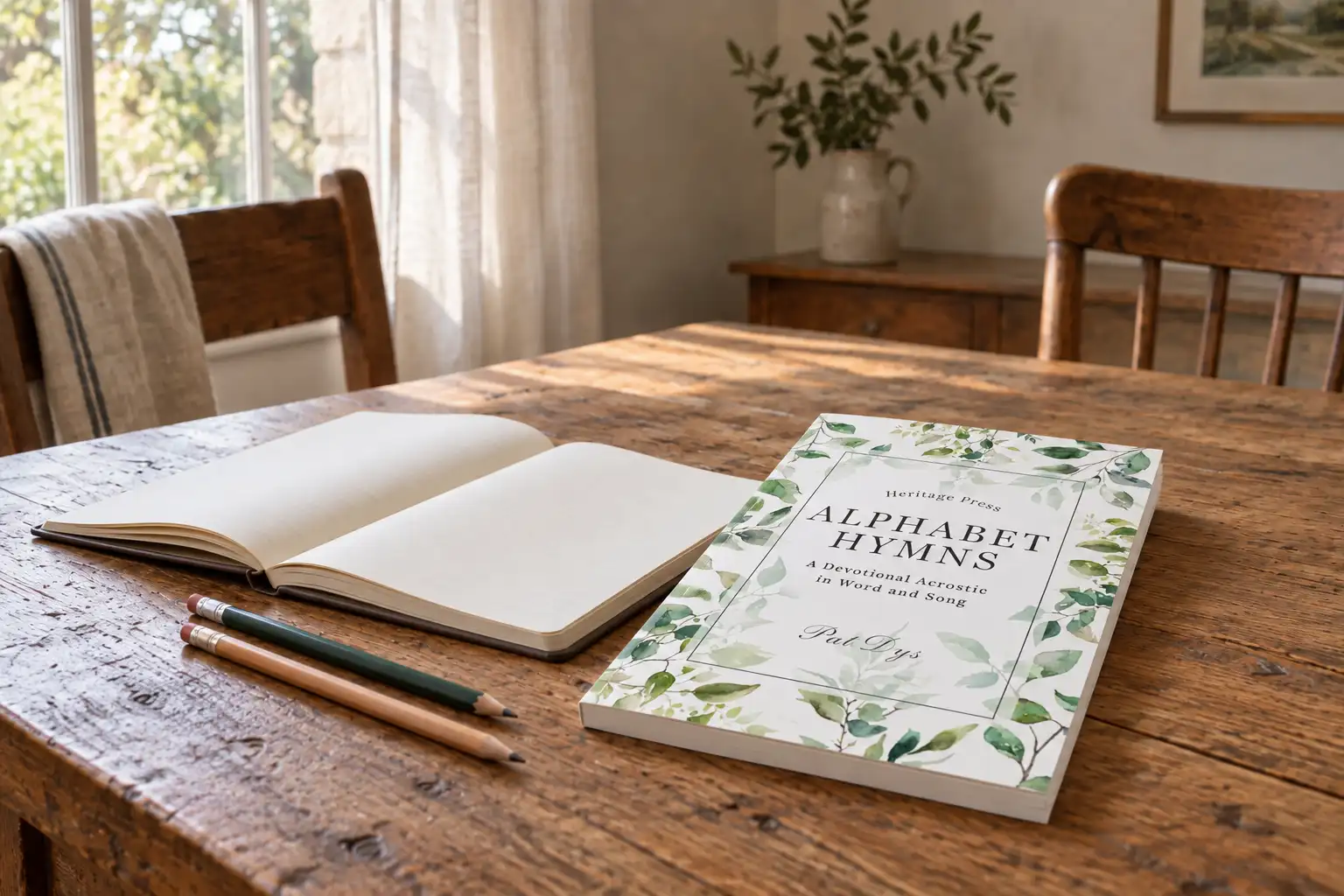
To read a hymn for devotional reflection, begin with its Scripture passage, read the poem aloud, and follow one connection carefully before responding in prayer or song. Slow reading gives you time to return to words that deserve another look.
Each of the 26 original poems in Alphabet Hymns follows selected Scripture passages and has a suggested hymn tune. “Do Not Be Anxious” gives us an example to read closely. Its preceding page brings together Philippians 4:1–7, James 1:2–4, and James 1:12; the poem is on page 8. Keep both pages of the sample beside you as you read.
Begin with the whole Scripture selection
Read the Scripture before turning to the poem. Philippians 4:1–7 includes words about standing fast, agreement between fellow workers, rejoicing, gentleness, prayer, and peace. The selections from James speak of trials, patience, endurance, and the crown of life.
Notice that the reading reaches beyond the concern named in the hymn’s title. There are other people in the Philippians passage: named fellow workers and a request for help. As you move to the poem, keep those relationships in view. A hymn title can draw your attention to one theme without containing everything the accompanying Scripture says.
If a sentence puzzles you, open your Bible to the surrounding chapter. The selected verses are a place to begin reading, and you can return to their wider setting before drawing a conclusion.
Follow the first stanza beyond its opening line
Read Pat Dys’s poem once aloud without singing. Then return to the first stanza. It begins with the command named in its title, but moves on to standing fast, being of one mind with others, and rejoicing.
Look back at Philippians 4:1–4. Where do you find those thoughts? Notice how the poem brings several parts of the passage into four lines. Its movement gives you more to consider than an isolated instruction about anxiety. The speaker is also concerned with life alongside other people and with rejoicing in the Lord.
Choose one connection to mark in your own notes. For example, place “first stanza” beside Philippians 4:2–3 and write a question about agreement among fellow workers.
Pause where the Scripture passages meet
The second stanza begins:
Let gentleness mark all you say or do.
Let patience do its perfect work in you,
These two lines bring gentleness and patience together from different Scripture passages. Gentleness appears in Philippians 4:5; patience and its work appear in James 1:2–4. Read those verses again, then return to the lines.
Consider these connections: What does Philippians say about how gentleness is made known? What does James connect with the growth of patience? Let the wording of each passage shape your answer before thinking about your own circumstances.
The poem joins the thoughts in a singable stanza. Read each passage in context as you consider the connection; the poem draws on selected thoughts rather than repeating every detail.
Read the ending with both passages open
The last stanza turns to prayer and peace, then closes with standing fast and the crown of life. Compare its opening two lines with Philippians 4:6–7 and its closing two with James 1:12. Notice which words the poem carries forward and which details remain in the Scripture passage.
For example, Philippians explicitly includes thanksgiving with prayer and requests. Bring that detail into your own prayer even though it is not named in the hymn’s final stanza. Reading the two texts together can mean noticing their differences as well as their shared words.
Bring your concerns before God, with room to continue praying after the book is closed.
Respond to one thing you have read
Choose one response: pray about a concern, give thanks in your own words, or write a question to revisit. If you want to keep a note, begin a prayer journal entry with the passage reference and the connection you noticed.
The hymn is paired with “Spirit of God, Descend Upon My Heart,” tune Morecambe. Sing it if you know the melody, or read the words aloud again. Carry a stanza and its Scripture reference into your next reading.