
Read and sing together at home
Read Scripture, sing one hymn, and make time for conversation as a family.
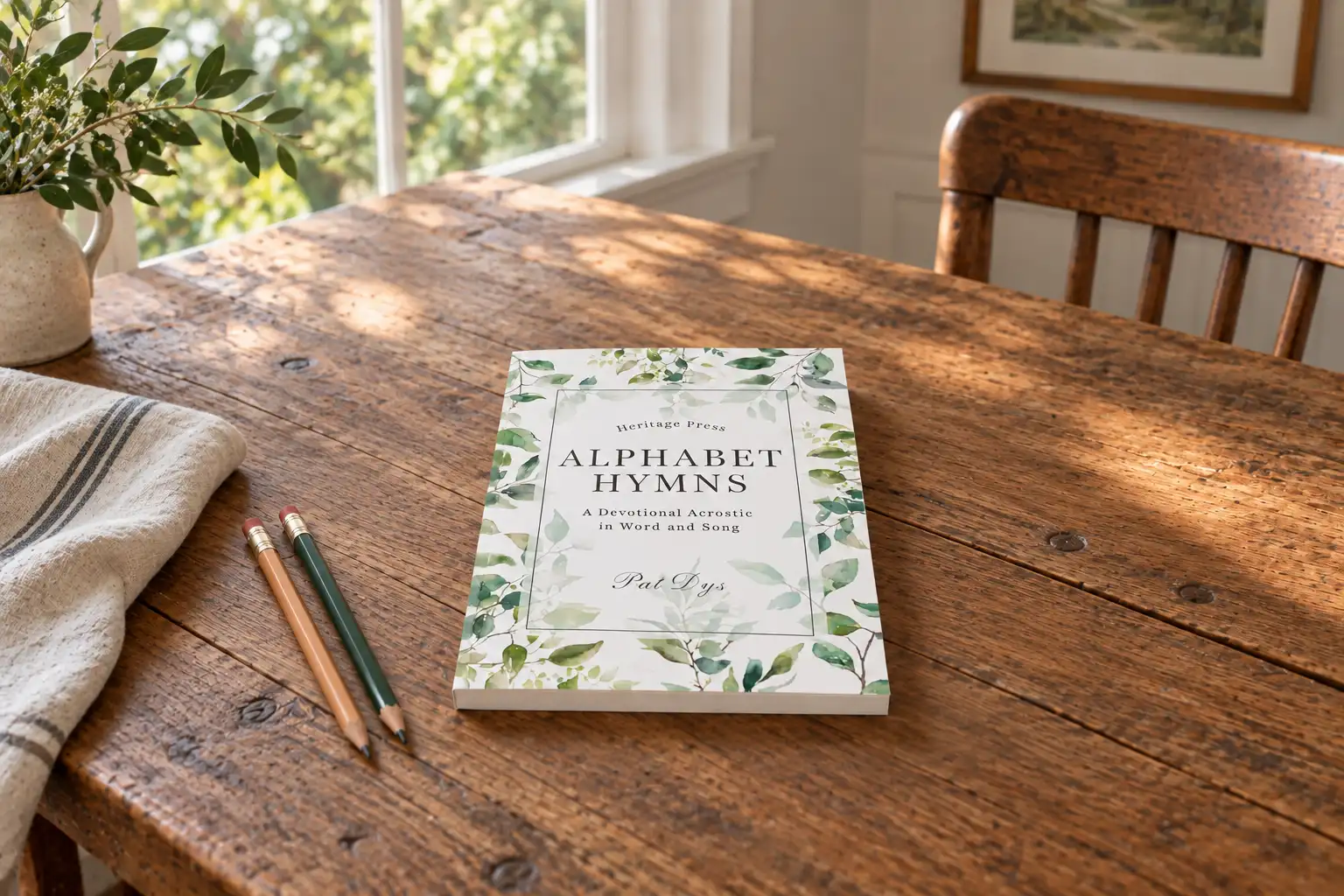
A family devotion with hymns can be simple: read a short Scripture passage, consider one part of a hymn, and pray together. Choose a moment that fits your household, whether that is after a meal or before the day begins. You can leave the rest of the hymn for another day.
Alphabet Hymns places selected Scripture passages before each poem and suggests a hymn melody for singing it. That gives you words to read together even when nobody is ready to lead a song. The approach below is our suggestion for using one of those readings at home.
Choose one reading before you gather
For a first shared reading, turn to “Do Not Be Anxious.” The Scripture page before it includes Philippians 4:1–7, James 1:2–4, and James 1:12. The hymn follows on page 8. You can see the paired pages in the book sample.
For a short gathering, pair Philippians 4:4–7 with the hymn’s final stanza. Read both beforehand and choose a question you would enjoy discussing together.
Read the passage and leave room to answer
Read Philippians 4:4–7 aloud. Ask one concrete question: “What does this passage tell us to bring to God?” Leave time for each person’s response.
A younger child can listen or repeat a short phrase after an adult. A confident reader can take a sentence; someone who finds reading aloud difficult can follow silently. For a household with mixed ages, invite each person to notice a word rather than expecting everyone to explain the whole passage. Listening is a real way to take part.
If a word is unfamiliar, pause to explain it plainly and return to the sentence. If someone raises a larger question, write it down to revisit. You do not have to resolve every question before you can continue reading together.
Bring the hymn alongside the passage
Read the final stanza of Pat Dys’s “Do Not Be Anxious” from the book. It begins:
When trials come, then turn to God in prayer.
Ask, “Where did we hear about prayer in the passage?” Return to Philippians 4:6–7 and let the family notice the connection. The poem also speaks of standing fast and the crown of life. Those words give you a reason to read James 1:12 on another occasion, when you have time to discuss that connection.
Keep the Scripture and the poem distinct as you speak: “Here are the words we read in Philippians; now listen to how the hymn responds.” A hymn can give you words to sing in response to Scripture. Return to Scripture when you want to consider what the passage itself says.
If nobody knows the tune
This hymn names “Spirit of God, Descend Upon My Heart” as its suggested classic hymn, with the tune name Morecambe. If someone knows the melody, they can begin a stanza and invite the others to join.
If the tune is new to everyone, read the stanza together today. Learning the music can be a separate activity; our guide to finding an unfamiliar hymn tune explains where to begin. The reading does not need to wait for a musician, a recording, or a confident singer.
Close in prayer
Invite a brief prayer in response to what you read. An adult can pray for the household, or anyone who wishes can add a sentence. Leave room for private prayer as well as concerns people choose to share.
For a very short gathering, keep just three things: the passage, the opening line of the stanza, and a prayer. On a day with more time, hear another person’s question or read the rest of the hymn. Return to the same hymn at another gathering if the conversation invites it.