
Choosing poetry for devotional reading
Choose a Christian poetry book by reading a poem, noticing its relationship to Scripture, and considering how you want to use it.
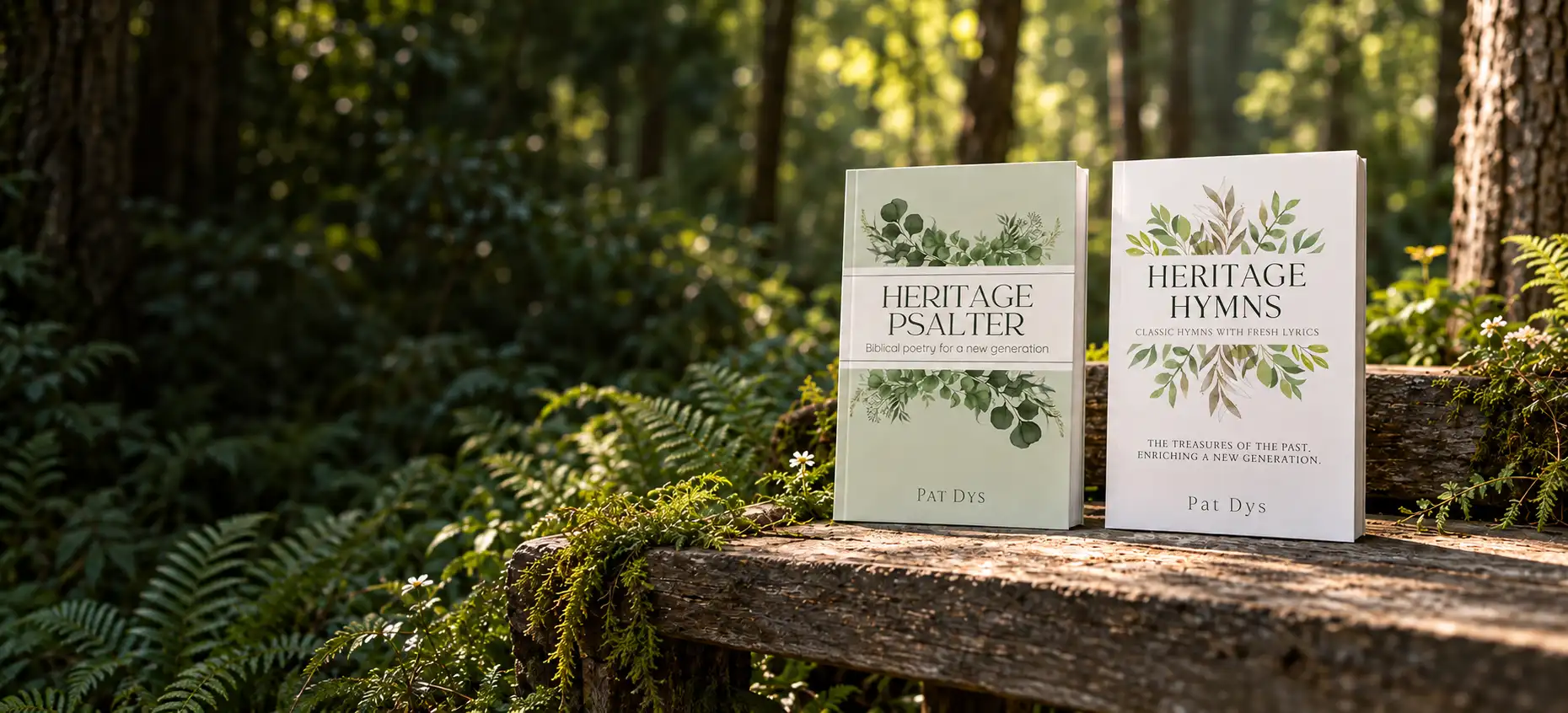
Choose a Christian poetry book by reading a complete poem before you buy it. Notice what it says, how it uses Scripture, and whether you would like to return to its words. Then consider where the book will belong: beside your Bible, at the family table, or in the hands of someone you love.
At Heritage Press, we publish Pat Dys’s hymn lyrics and devotional poetry. Here are the questions we would bring to choosing a book, along with suggestions from Pat’s collections.
Spend time with a sample
Read a complete poem, aloud if possible. Listen for its rhythm and notice the lines you would want to return to.
Ask yourself:
- What is this poem speaking about? Can I follow its main thought?
- Which line would I want to read again, and why?
- Does its language suit the person who will read it?
- Would I enjoy reading this quietly, aloud with someone else, or in song?
These questions also help when choosing a gift. A reader who loves to sing may welcome suggested hymn tunes. Someone who enjoys writing may appreciate room in a separate notebook for a response. Let the person’s interests guide your choice.
Notice how the poetry uses Scripture
A poem may quote a passage, put some of its thoughts into verse, or respond to it in prayer. Those are different relationships. Read any Scripture references alongside the poem and consider how the writer has used them.
For instance, Pat’s “Great Are the Mysteries of God” names several passages, including Job 38:1–7 and Romans 8:26–28. The poem moves through creation, salvation, and the work of the Spirit. Reading its references helps you follow those connections instead of treating each line as an isolated saying.
Her Heritage Psalter has a different organizing principle: its poems respond to the Psalms. They are devotional responses, not a Bible translation or a verse-by-verse metrical paraphrase. If that distinction is new to you, our explanation of what a psalter is describes the different uses of the name.
Consider the shape of your reading
A book does not have to contain a dated plan to fit a regular reading time. Think instead about what would help you open it again.
For a short reading with Scripture passages included: Alphabet Hymns contains 26 hymns arranged by letter, with selected Scripture passages before each poem and a suggested familiar melody. You can choose a letter and stay with that reading for as long as you wish. The alphabet gives the collection its arrangement, not a required 26-day schedule.
For reading alongside the Psalms: Heritage Psalter pairs devotional poetry with familiar hymn tunes. Choose a poem, read the biblical Psalm it responds to, then return to Pat’s words. The book sample lets you see that relationship in actual pages before choosing the collection.
For a wider collection to return to or share: Heritage Hymns contains 180 original hymn lyrics paired with established melodies. Its Scripture, meter, and tune indexes help you find a hymn for a passage, theme, or melody. This can be useful when you have a passage in mind or want to choose words for a gathering.
Do you need to be able to sing?
You can read these lyrics as poetry without singing them. A suggested melody adds another way to attend to the words.
If singing is part of your plans, look at the actual tune information in a sample. A hymn title you recognize can help, but titles and melodies do not always have a single pairing. The printed tune name identifies the melody more precisely. Our guide to finding an unfamiliar tune walks through a real example.
When choosing for a group, read the words aloud yourself first. Consider the length, vocabulary, and the time people will have to become familiar with them. Before reproducing or projecting lyrics, ask the publisher about permissions.
Leave room for your own response
Some readers want only the poem and a quiet moment. Others like to write down a question, a Scripture reference, or a prayer. Either approach can accompany the same book.
The Companion Journal for Alphabet Hymns is a separate book with blank lined pages. It is sold separately from the hymn collection and leaves room for your own words. If you prefer your own notebook, use that. The useful question is whether you want a place to keep your words beside the ones you have read.
Before deciding, read three poems by Pat Dys. Give one your attention, then look at the collection it comes from.